
265 lines
8.0 KiB
Markdown
265 lines
8.0 KiB
Markdown
# 14.4 User validation
|
|
|
|
In the process of developing Web applications, user authentication is frequently encountered problems developers, user log in, registration, log out and other operations, and the general certification is also divided into three aspects of certification
|
|
|
|
- HTTP Basic and HTTP Digest Authentication
|
|
- Third Party Certified Integration: QQ, micro-blogging, watercress, OPENID, Google, GitHub, Facebook and twitter, etc.
|
|
- Custom user log in, registration, log out, are generally based on session, cookie authentication
|
|
|
|
beego There is no way for any of these three forms of integration, but can make use of third party open source library to achieve the above three methods of user authentication, but the first two subsequent authentication beego be gradually integrated.
|
|
|
|
## HTTP basic and digest authentication
|
|
|
|
These two certifications are some applications using relatively simple authentication, there are already open source third-party library supports both authentication:
|
|
|
|
github.com/abbot/go-http-auth
|
|
|
|
The following code demonstrates how to use this library in order to achieve the introduction of beego Certification:
|
|
|
|
|
|
package controllers
|
|
|
|
import (
|
|
"github.com/abbot/go-http-auth"
|
|
"github.com/astaxie/beego"
|
|
)
|
|
|
|
func Secret(user, realm string) string {
|
|
if user == "john" {
|
|
// password is "hello"
|
|
return "$1$dlPL2MqE$oQmn16q49SqdmhenQuNgs1"
|
|
}
|
|
return ""
|
|
}
|
|
|
|
type MainController struct {
|
|
beego.Controller
|
|
}
|
|
|
|
func (this *MainController) Prepare() {
|
|
a := auth.NewBasicAuthenticator("example.com", Secret)
|
|
if username := a.CheckAuth(this.Ctx.Request); username == "" {
|
|
a.RequireAuth(this.Ctx.ResponseWriter, this.Ctx.Request)
|
|
}
|
|
}
|
|
|
|
func (this *MainController) Get() {
|
|
this.Data["Username"] = "astaxie"
|
|
this.Data["Email"] = "astaxie@gmail.com"
|
|
this.TplNames = "index.tpl"
|
|
}
|
|
|
|
The above code takes advantage of beego the prepare function in the normal logic function is called before the certification, so it is very simple to achieve a http auth, digest authentication is the same principle.
|
|
|
|
## OAuth and OAuth 2 certification
|
|
|
|
OAuth and OAuth 2 is currently more popular two authentication methods, but fortunately, there is a third-party library to achieve this certification, but it is realized abroad, and did not QQ, microblogging like domestic application certified integration:
|
|
|
|
github.com/bradrydzewski/go.auth
|
|
|
|
The following code demonstrates how to put the library in order to achieve the introduction of beego OAuth authentication, an example to demonstrate GitHub here:
|
|
|
|
1. Add two routes
|
|
|
|
beego.RegisterController("/auth/login", &controllers.GithubController{})
|
|
beego.RegisterController("/mainpage", &controllers.PageController{})
|
|
|
|
2. Then we deal GithubController landing page:
|
|
|
|
package controllers
|
|
|
|
import (
|
|
"github.com/astaxie/beego"
|
|
"github.com/bradrydzewski/go.auth"
|
|
)
|
|
|
|
const (
|
|
githubClientKey = "a0864ea791ce7e7bd0df"
|
|
githubSecretKey = "a0ec09a647a688a64a28f6190b5a0d2705df56ca"
|
|
)
|
|
|
|
type GithubController struct {
|
|
beego.Controller
|
|
}
|
|
|
|
func (this *GithubController) Get() {
|
|
// set the auth parameters
|
|
auth.Config.CookieSecret = []byte("7H9xiimk2QdTdYI7rDddfJeV")
|
|
auth.Config.LoginSuccessRedirect = "/mainpage"
|
|
auth.Config.CookieSecure = false
|
|
|
|
githubHandler := auth.Github(githubClientKey, githubSecretKey)
|
|
|
|
githubHandler.ServeHTTP(this.Ctx.ResponseWriter, this.Ctx.Request)
|
|
}
|
|
|
|
3. treatment after successful landing pages
|
|
|
|
package controllers
|
|
|
|
import (
|
|
"github.com/astaxie/beego"
|
|
"github.com/bradrydzewski/go.auth"
|
|
"net/http"
|
|
"net/url"
|
|
)
|
|
|
|
type PageController struct {
|
|
beego.Controller
|
|
}
|
|
|
|
func (this *PageController) Get() {
|
|
// set the auth parameters
|
|
auth.Config.CookieSecret = []byte("7H9xiimk2QdTdYI7rDddfJeV")
|
|
auth.Config.LoginSuccessRedirect = "/mainpage"
|
|
auth.Config.CookieSecure = false
|
|
|
|
user, err := auth.GetUserCookie(this.Ctx.Request)
|
|
|
|
//if no active user session then authorize user
|
|
if err != nil || user.Id() == "" {
|
|
http.Redirect(this.Ctx.ResponseWriter, this.Ctx.Request, auth.Config.LoginRedirect, http.StatusSeeOther)
|
|
return
|
|
}
|
|
|
|
//else, add the user to the URL and continue
|
|
this.Ctx.Request.URL.User = url.User(user.Id())
|
|
this.Data["pic"] = user.Picture()
|
|
this.Data["id"] = user.Id()
|
|
this.Data["name"] = user.Name()
|
|
this.TplNames = "home.tpl"
|
|
}
|
|
|
|
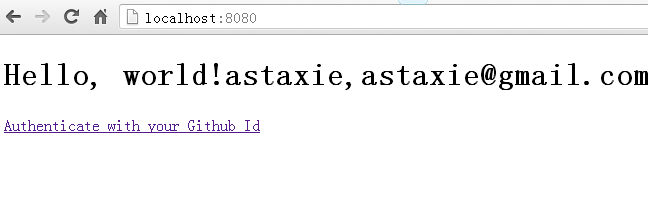
The whole process is as follows, first open your browser and enter the address:
|
|
|
|
|
|
|
|
Figure 14.4 shows the home page with a log in button
|
|
|
|
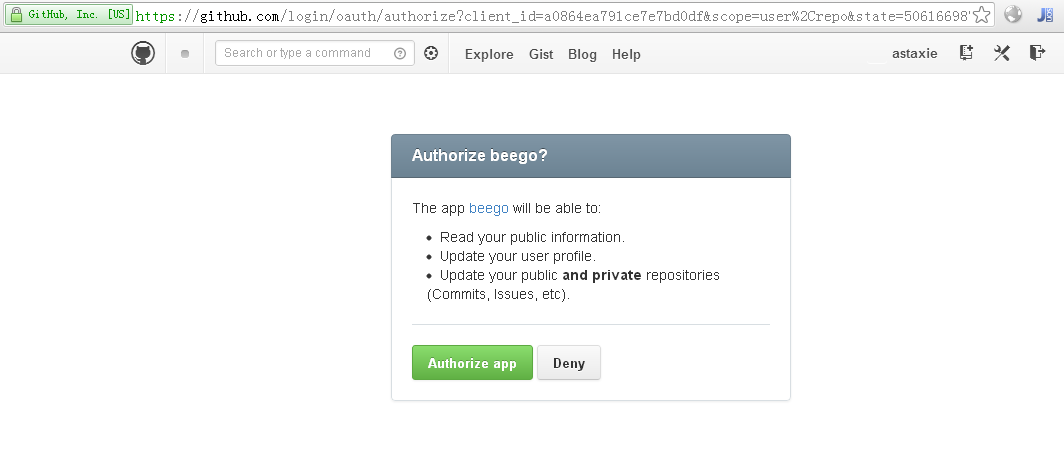
Then click on the link following screen appears:
|
|
|
|
|
|
|
|
Figure 14.5 is displayed after clicking the log in button authorization GitHub page
|
|
|
|
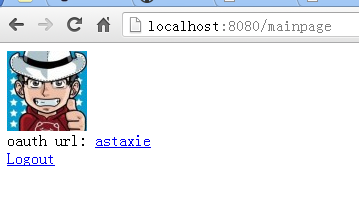
Then click Authorize app will appear the following interface:
|
|
|
|
|
|
|
|
Figure 14.6 is displayed after log in authorization to obtain information page GitHub
|
|
|
|
## Custom authentication
|
|
|
|
Custom authentication and session are generally a combination of proven, the following code from an open source based beego blog:
|
|
|
|
//Login process
|
|
func (this *LoginController) Post() {
|
|
this.TplNames = "login.tpl"
|
|
this.Ctx.Request.ParseForm()
|
|
username := this.Ctx.Request.Form.Get("username")
|
|
password := this.Ctx.Request.Form.Get("password")
|
|
md5Password := md5.New()
|
|
io.WriteString(md5Password, password)
|
|
buffer := bytes.NewBuffer(nil)
|
|
fmt.Fprintf(buffer, "%x", md5Password.Sum(nil))
|
|
newPass := buffer.String()
|
|
|
|
now := time.Now().Format("2006-01-02 15:04:05")
|
|
|
|
userInfo := models.GetUserInfo(username)
|
|
if userInfo.Password == newPass {
|
|
var users models.User
|
|
users.Last_logintime = now
|
|
models.UpdateUserInfo(users)
|
|
|
|
//Set the session successful login
|
|
sess := globalSessions.SessionStart(this.Ctx.ResponseWriter, this.Ctx.Request)
|
|
sess.Set("uid", userInfo.Id)
|
|
sess.Set("uname", userInfo.Username)
|
|
|
|
this.Ctx.Redirect(302, "/")
|
|
}
|
|
}
|
|
|
|
//Registration process
|
|
func (this *RegController) Post() {
|
|
this.TplNames = "reg.tpl"
|
|
this.Ctx.Request.ParseForm()
|
|
username := this.Ctx.Request.Form.Get("username")
|
|
password := this.Ctx.Request.Form.Get("password")
|
|
usererr := checkUsername(username)
|
|
fmt.Println(usererr)
|
|
if usererr == false {
|
|
this.Data["UsernameErr"] = "Username error, Please to again"
|
|
return
|
|
}
|
|
|
|
passerr := checkPassword(password)
|
|
if passerr == false {
|
|
this.Data["PasswordErr"] = "Password error, Please to again"
|
|
return
|
|
}
|
|
|
|
md5Password := md5.New()
|
|
io.WriteString(md5Password, password)
|
|
buffer := bytes.NewBuffer(nil)
|
|
fmt.Fprintf(buffer, "%x", md5Password.Sum(nil))
|
|
newPass := buffer.String()
|
|
|
|
now := time.Now().Format("2006-01-02 15:04:05")
|
|
|
|
userInfo := models.GetUserInfo(username)
|
|
|
|
if userInfo.Username == "" {
|
|
var users models.User
|
|
users.Username = username
|
|
users.Password = newPass
|
|
users.Created = now
|
|
users.Last_logintime = now
|
|
models.AddUser(users)
|
|
|
|
//Set the session successful login
|
|
sess := globalSessions.SessionStart(this.Ctx.ResponseWriter, this.Ctx.Request)
|
|
sess.Set("uid", userInfo.Id)
|
|
sess.Set("uname", userInfo.Username)
|
|
this.Ctx.Redirect(302, "/")
|
|
} else {
|
|
this.Data["UsernameErr"] = "User already exists"
|
|
}
|
|
|
|
}
|
|
|
|
func checkPassword(password string) (b bool) {
|
|
if ok, _ := regexp.MatchString("^[a-zA-Z0-9]{4,16}$", password); !ok {
|
|
return false
|
|
}
|
|
return true
|
|
}
|
|
|
|
func checkUsername(username string) (b bool) {
|
|
if ok, _ := regexp.MatchString("^[a-zA-Z0-9]{4,16}$", username); !ok {
|
|
return false
|
|
}
|
|
return true
|
|
}
|
|
|
|
With the user log in and registration, where you can add other modules such as the judgment of whether the user log in:
|
|
|
|
func (this *AddBlogController) Prepare() {
|
|
sess := globalSessions.SessionStart(this.Ctx.ResponseWriter, this.Ctx.Request)
|
|
sess_uid := sess.Get("userid")
|
|
sess_username := sess.Get("username")
|
|
if sess_uid == nil {
|
|
this.Ctx.Redirect(302, "/admin/login")
|
|
return
|
|
}
|
|
this.Data["Username"] = sess_username
|
|
}
|
|
|
|
## Links
|
|
|
|
- [Directory](preface.md)
|
|
- Previous section: [Form](14.3.md)
|
|
- Next section: [Multi-language support](14.5.md)
|
|
|